Industrial Robots Overview: Discover Industrial Automation, Robotic Arms, Smart Manufacturing, Integration Advice, and Technical Resources
Industrial robots are programmable machines designed to perform repetitive, precise, heavy, or technically complex activities in industrial environments.
They are widely used in manufacturing plants, warehouses, processing facilities, laboratories, and production lines. Modern industrial automation combines robotic hardware, sensors, controllers, software, and connected data systems to improve consistency and support efficient operations.
Industrial robots were developed to automate tasks that may be difficult to repeat manually at high speed or with consistent accuracy. Today, robotic arms for manufacturing can perform welding, assembly, material handling, inspection, packaging, painting, and other production activities. Their role has expanded as factories adopt connected equipment, artificial intelligence, machine vision, and smart manufacturing solutions.
Industrial Robots and Their Purpose
An industrial robot usually consists of a mechanical structure, motion axes, motors, sensors, a controller, and specialized software. The robot follows programmed instructions or receives information from connected systems to complete a defined task.
Industrial automation solutions may include several connected technologies:
- Industrial robots and robotic arms
- Programmable logic controllers
- Servo motors and motion systems
- Machine vision cameras
- Safety sensors and protective equipment
- Human-machine interfaces
- Industrial robotics software
- Manufacturing execution systems
- Industrial communication networks
Industrial Automation Components allow robots to communicate with machines and production systems. For example, a robot may receive a production signal from a controller, collect a component using a gripper, place it into a machine, and send completion data to a monitoring platform.
Why Industrial Robot Automation Matters
Industrial robot automation is important because many industries require consistent production, accurate movement, controlled processes, and reliable handling of materials. Robots can repeat programmed movements for long operating periods while collecting information about equipment status and process performance.
Industrial robotics affects manufacturers, production engineers, maintenance teams, system integrators, equipment designers, and technology developers. It may also support safer process design by reducing direct human exposure to high temperatures, heavy materials, sharp equipment, or hazardous production areas.
Common operational challenges addressed by factory automation systems include:
- Repetitive production activities
- Inconsistent manual positioning
- Difficult material movement
- Complex welding or assembly tasks
- Limited process visibility
- Production bottlenecks
- Quality inspection requirements
- Changes in product design or production volume
Robots are not automatically suitable for every activity. Successful industrial robot integration depends on production requirements, workspace design, equipment compatibility, safety planning, and technical maintenance.
Main Types of Industrial Robots
Industrial robots are commonly classified by their mechanical design, movement pattern, and intended application.
| Robot Type | Main Characteristics | Common Applications |
|---|---|---|
| Articulated robot | Multiple rotating joints | Welding, assembly, handling |
| Cartesian robot | Moves along linear X, Y, and Z axes | Machine loading, packaging |
| SCARA robot | Fast horizontal movement | Electronics assembly |
| Delta robot | Lightweight parallel structure | Sorting and high-speed packaging |
| Cylindrical robot | Rotational and linear movement | Material handling |
| Collaborative robot | Designed for controlled shared workspaces | Assembly and inspection |
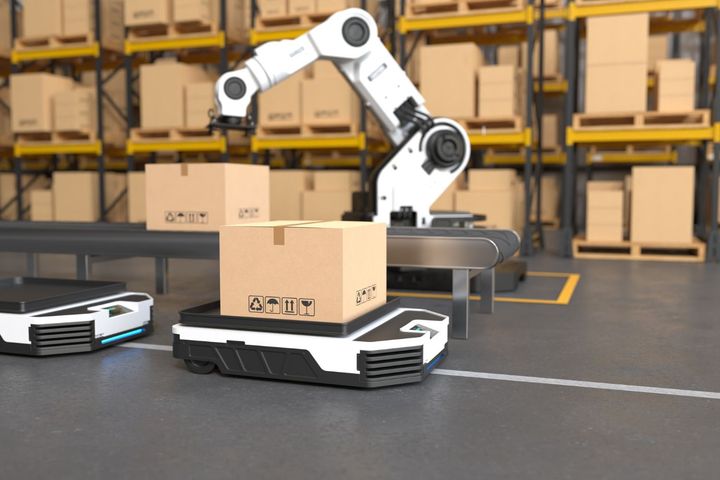
| Mobile industrial robot | Moves through facilities | Internal logistics |
Articulated robotic arms are among the most widely recognized systems. Many models have six axes, allowing the robot to move and orient tools across complex paths.
Cartesian robots use straight-line movement and are often applied where predictable positioning is important. Their structure can support automated storage, material movement, and machine operations.
SCARA robots are designed for rapid, repeatable movements, particularly in electronics and small-component assembly.
Delta robots use several connected arms to move a central platform. Their speed makes them useful for sorting, picking, and packaging lightweight products.
Collaborative robots, often called cobots, are designed for applications where people and robots may operate within a shared environment. Their use still requires a formal risk assessment and application-specific safety measures.
Benefits and Industrial Applications
Industrial robots can support production consistency, process monitoring, equipment coordination, and controlled material movement. The results depend on the application, system design, maintenance practices, and operating conditions.
| Application | Typical Robot Function | Related Technology |
| Robotic welding systems | Controlled welding movement | Welding controllers and sensors |
| Assembly | Component positioning | Vision systems and grippers |
| Machine tending | Loading and unloading machines | PLCs and safety controls |
| Packaging | Sorting and placement | Conveyor integration |
| Palletizing | Stacking products | End-of-arm tools |
| Inspection | Detecting visible defects | Cameras and AI software |
| Material handling | Moving parts or containers | Sensors and automated guidance |
| Painting | Applying controlled coatings | Motion programming |
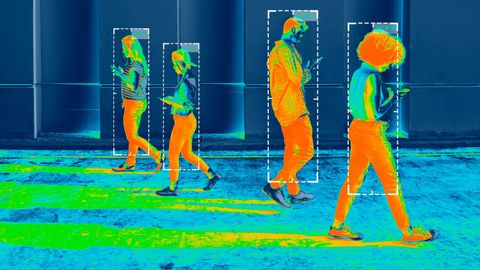
Industrial inspection robots may use cameras, laser sensors, thermal imaging, or machine-learning systems to identify visible defects and measure product characteristics. AI powered industrial robots can analyze sensor information, recognize patterns, or adapt to changing production conditions. However, AI-based operation requires suitable data, testing, validation, and human oversight.
Robotic process automation industrial systems should not be confused with office-based software automation. In industrial environments, automation normally connects physical machinery, sensors, controllers, and production software.
Top Industrial Robotics Companies
Several established organizations develop industrial robots, automation platforms, controllers, and related technologies. The following companies are widely recognized in the industrial robotics sector:
- ABB Robotics — Develops industrial robots, autonomous mobile robots, robotic software, and automation technologies.
- FANUC — Produces industrial robots, CNC systems, controllers, and factory automation equipment.
- KUKA — Develops robotic systems for manufacturing, logistics, healthcare, and automated production.
- Yaskawa Electric — Known for motion control, industrial robots, and automation technologies.
- Kawasaki Robotics — Produces industrial robots for handling, assembly, welding, and other applications.
These organizations provide different robot designs and technical ecosystems. Equipment selection should be based on application requirements, payload, reach, speed, environmental conditions, software compatibility, safety requirements, and integration capability.
Recent Industrial Robotics Updates
Industrial robotics is increasingly connected with artificial intelligence, digital twins, simulation, machine vision, and advanced computing. Recent developments have focused on improving how robots are programmed, tested, monitored, and connected within smart factories.
In March 2026, NVIDIA reported that FANUC, ABB Robotics, YASKAWA, and KUKA were integrating Omniverse libraries and Isaac simulation technologies into virtual commissioning workflows. These tools can support digital representations of robots and production environments before physical deployment.
The growth of physical AI is also influencing industrial robotics research. In July 2026, Samsung announced a dedicated robotics division focused on robotics technologies and research, reflecting broader industry interest in AI-enabled physical systems.
Other developing trends include:
- Digital twins for production planning
- AI-supported machine vision
- More flexible collaborative automation
- Simulation-based robot programming
- Autonomous mobile robots
- Connected factory data platforms
- Improved robotic inspection systems
- Greater attention to cybersecurity
These developments are still evolving. Technical performance depends on the application, available data, hardware design, software quality, and operating environment.
Laws, Policies, and Safety Standards
Industrial robots are affected by workplace safety requirements, machinery regulations, electrical standards, and technical rules that vary by country and region. Organizations should review the applicable national requirements before installing or operating robotic equipment.
ISO 10218 is an important international safety standard series for industrial robots. ISO 10218-1:2025 addresses safety requirements for industrial robots, while ISO 10218-2:2025 addresses industrial robot applications and robot cells.
The 2025 updates reflect changes in industrial automation and include broader attention to collaborative applications, functional safety, and connected robotic systems.
Important safety activities may include:
- Application-specific risk assessment
- Emergency stop system design
- Safety-rated sensors
- Protective barriers or controlled zones
- Safe operating procedures
- Equipment inspection
- Technical documentation
- Operator training
- Maintenance planning
- Cybersecurity controls for connected systems
A robot that is safe in one application may require different protective measures in another. Safety must be evaluated for the complete robot cell rather than the robot alone.
Tools and Technical Resources
Industrial robotics software helps engineers design, simulate, program, monitor, and maintain automated systems.
Useful resource categories include:
- Robot simulation platforms: Test robot movement and workspace layouts.
- Offline programming tools: Develop robot programs without interrupting production.
- Digital twin platforms: Model equipment and production processes.
- Machine vision software: Support inspection, identification, and positioning.
- PLC programming tools: Coordinate robots with industrial machinery.
- Industrial network diagnostic tools: Check communication between connected devices.
- Robot reach calculators: Estimate whether a robot can access required work areas.
- Payload calculators: Evaluate tool and material handling requirements.
- Risk assessment templates: Document hazards and safety controls.
- Manufacturer technical libraries: Provide manuals, specifications, programming references, and application guidance.
Industrial robot integration should normally begin with a clear technical assessment. Important information includes payload, reach, cycle requirements, tool design, product variation, workspace conditions, electrical requirements, safety controls, and software compatibility.
Frequently Asked Questions
What is an industrial robot?
An industrial robot is a programmable machine used to perform physical production activities such as welding, assembly, inspection, handling, or packaging.
What is the difference between an industrial robot and a collaborative robot?
Traditional industrial robots often operate inside controlled work areas. Collaborative robots are designed for applications where people and robots may share a workspace, but safety requirements still depend on the complete application.
How do robotic arms for manufacturing work?
Robotic arms use motors, joints, controllers, sensors, and software to move tools or materials through programmed paths.
What is industrial robot integration?
Industrial robot integration is the process of connecting a robot with tools, sensors, machinery, safety systems, software, and production workflows.
Can AI powered industrial robots replace all manual work?
No. AI can support perception, analysis, and adaptive operation, but many activities still require human judgment, supervision, technical knowledge, and application-specific planning.
Conclusion
Industrial robots are important components of modern factory automation systems. They combine mechanical movement, industrial automation components, sensors, controllers, and software to support manufacturing activities such as welding, assembly, inspection, packaging, and material handling.
The continued development of industrial robotics software, AI powered industrial robots, machine vision, digital twins, and smart manufacturing solutions is expanding the capabilities of automated production. At the same time, successful deployment depends on careful industrial robot integration, safety assessment, technical compatibility, maintenance, and responsible system management.
Industrial robotics is best understood as a connected technology ecosystem rather than a single machine. When robots, automation controls, data systems, and safety measures are designed together, they can support structured and adaptable manufacturing environments.
Informational Disclaimer: This article is intended for general educational purposes. Technical specifications, implementation requirements, regulatory obligations, and project estimates vary by robot type, application, region, facility conditions, and system design. Information should be reviewed with qualified engineering, safety, and regulatory professionals before implementation.