Mercedes-Benz GLC Electric Guide: Explore Feature, Facts, Details, and EV Technology Insights
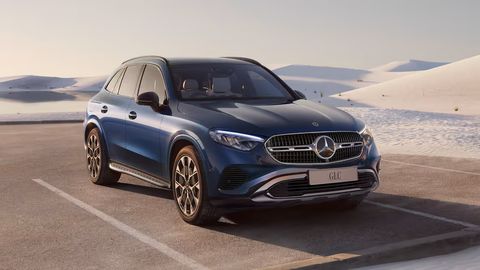
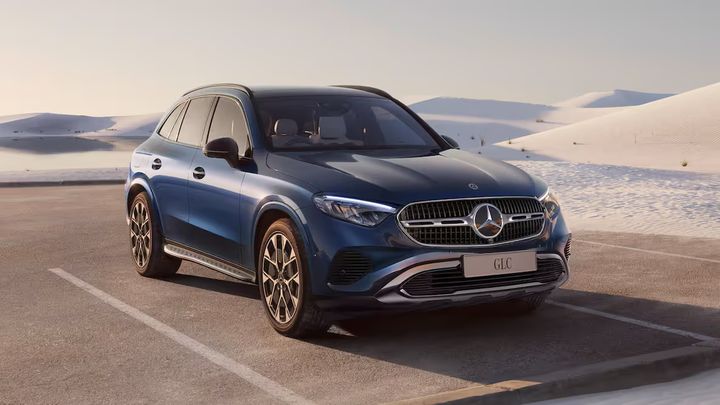
The Mercedes-Benz GLC Electric is the battery-electric version of Mercedes-Benz's popular GLC SUV family. Internationally known as the GLC with EQ Technology, it introduces a dedicated electric powertrain while retaining the practical SUV format associated with the GLC. Mercedes-Benz describes the new model as a battery-electric vehicle developed around an 800-volt electrical architecture.
For readers researching an electric SUV India option, it is important to distinguish global specifications from India-specific availability. As of September 2026, the Mercedes-Benz India passenger-car configurator lists the conventional GLC but does not list the electric GLC among its Indian electric models. Therefore, India launch timing, local specifications, pricing, and equipment should be verified through official Mercedes-Benz India information before making decisions.
Understanding the Mercedes-Benz GLC Electric
The electric GLC uses a battery-electric drivetrain rather than an internal-combustion engine. The currently documented GLC 400 4MATIC with EQ Technology uses dual electric motors, all-wheel drive, and a lithium-ion battery with 94 kWh of usable energy. Mercedes-Benz lists peak output of 360 kW and peak torque of 800 Nm for this version.
The model is part of Mercedes-Benz's broader transition toward multiple electric vehicles alongside combustion-engine and hybrid models. This approach allows buyers to compare different powertrain technologies according to driving requirements, charging access, and vehicle usage.
Mercedes GLC Electric Range and Battery Knowledge
Range is one of the most important subjects when studying an EV. Mercedes-Benz has stated that the GLC 400 4MATIC with EQ Technology can achieve up to about 715 kilometres under WLTP testing, although the exact figure varies according to specification and market.
The GLC EV battery has a usable capacity of 94 kWh in the GLC 400 4MATIC version. An 800-volt electrical system supports high-speed DC charging, with maximum DC charging power listed at up to 330 kW. Mercedes-Benz states that the vehicle can add a substantial amount of driving range during a 10-minute high-power charging session under suitable conditions.
Actual range depends on several factors:
- Driving speed and acceleration
- Temperature and weather
- Road conditions and terrain
- Wheel and tyre configuration
- Passenger and luggage load
- Heating or air-conditioning use
- Charging and battery conditions
Consequently, a laboratory range figure should be treated as a comparison reference rather than a guarantee of everyday driving distance.
Why the Electric GLC Matters Today
Electric SUVs are becoming increasingly relevant because they combine the higher seating position and cargo flexibility of an SUV with battery-electric propulsion. The topic affects drivers considering an electric vehicle guide, fleet planners, automotive researchers, and households evaluating charging infrastructure.
For an Indian audience, the discussion also involves EV charging, battery warranty, insurance, financing, and the availability of public charging stations.
An electric SUV can reduce dependence on petrol or diesel during driving, but its practical suitability depends heavily on charging access. A home charger, workplace charger, or dependable public EV charging station network can significantly influence everyday convenience.
Types and Variants of the Electric GLC
The electric GLC family is expanding beyond a single configuration. Mercedes-Benz has announced several variants with different outputs, battery capacities, and drivetrain arrangements.
| Variant | Drive | Peak Power | Usable Battery |
|---|---|---|---|
| GLC 400 4MATIC | AWD | 360 kW | 94 kWh |
| GLC 300 4MATIC | AWD | 310 kW | 85 kWh |
| GLC 250 | RWD | 260 kW | 85 kWh |
These figures are based on Mercedes-Benz's published international technical information and should not be treated as India-market specifications unless Mercedes-Benz confirms them for India.
The wider GLC family also includes petrol, diesel, and hybrid powertrain configurations in various markets. This distinction is useful because the term "GLC" does not automatically mean that a particular vehicle is fully electric.
Benefits and Applications of GLC Electric Technology
The electric GLC demonstrates several important EV technology concepts.
Efficient electric propulsion: Electric motors can deliver torque directly and support smooth acceleration without the conventional gear changes associated with many combustion vehicles.
High-voltage charging: The 800-volt architecture is designed to support high charging power and reduce charging time when compatible infrastructure is available.
Regenerative braking: Energy normally lost during deceleration can be recovered and directed back toward the battery.
Everyday SUV practicality: Mercedes-Benz lists a luggage compartment capacity of 570 litres, expandable to 1,740 litres, together with a 128-litre front storage compartment for specified electric GLC variants.
Digital vehicle technology: The electric GLC incorporates Mercedes-Benz's newer software and digital architecture, including intelligent navigation and charging-related functions.
Potential applications include urban commuting, highway travel, family transportation, executive mobility, and longer-distance journeys where charging infrastructure is appropriately planned.
Leading Companies Relevant to the Premium Electric SUV Market
The Mercedes-Benz GLC Electric belongs to a wider premium electric SUV market. Companies relevant to this segment include:
- Mercedes-Benz – GLC with EQ Technology and other electric models.
- BMW – Electric SUV models within its expanding i range.
- Audi – Battery-electric SUV models using its e-tron family.
- Volvo Cars – Electric SUVs across several vehicle segments.
- Jaguar Land Rover – Premium electric vehicle development across its brands.
These companies represent the broader competitive and technological context rather than providers of the Mercedes-Benz GLC Electric itself.
Recent Updates and Developments
The electric GLC has seen significant international development during the past year.
In October 2025, Mercedes-Benz announced that the GLC 400 4MATIC with EQ Technology was available to order in Germany and several European markets. The company stated a WLTP range of up to approximately 715 kilometres and highlighted its 800-volt charging system.
In March 2026, Mercedes-Benz published information from press testing in Portugal, further detailing the electric GLC's driving characteristics and technical specifications.
Mercedes-Benz subsequently expanded the international electric GLC range with additional variants, including the GLC 300 4MATIC electric and GLC 250 electric. The published specifications show differences in battery capacity, power, drivetrain, and charging capability.
Production also expanded during 2026, with Mercedes-Benz reporting increased production activity for the electric GLC at its Bremen facility and the integration of its latest battery generation.
For India, the key point is that international availability does not automatically confirm Indian-market launch specifications. Mercedes-Benz India's current online configurator should therefore be checked for official India availability and specifications.
Laws, Policies, and EV Programs in India
India's electric mobility environment is influenced by central government programs, taxation, manufacturing policies, and state-level EV regulations.
The PM E-DRIVE scheme was introduced to accelerate electric mobility, charging infrastructure, and domestic EV manufacturing. The scheme was originally notified in September 2024 and its broader implementation period was subsequently extended to March 31, 2028, although individual vehicle categories can have different eligibility periods.
Importantly, PM E-DRIVE incentives are not a universal subsidy for every electric passenger vehicle. Eligibility depends on the specific vehicle category and applicable scheme rules. Consumers should not assume that a premium electric SUV automatically qualifies for a central demand incentive.
Government information also states that GST on electric vehicles is 5%, while chargers and charging stations have been subject to a 5% GST rate. State-level registration and road-tax treatment can differ.
India is also supporting charging infrastructure. Government information published in 2026 reported thousands of public EV charging stations nationally and an allocation under PM E-DRIVE for additional charging infrastructure.
Tools and Resources for EV Research
Several resources can help readers evaluate an electric SUV:
- Mercedes-Benz official configurator: Useful for checking currently listed models and specifications.
- Mercedes-Benz range and charging tools: International Mercedes-Benz EV pages provide range and charging simulations.
- Charging-location applications: Navigation and EV charging apps can help identify compatible charging stations.
- Loan calculators: Useful for comparing monthly financing scenarios for an electric car loan.
- Insurance calculators: Helpful for reviewing electric vehicle insurance estimates.
- Battery warranty documentation: Important for understanding coverage duration and conditions.
- Government EV portals: PM E-DRIVE resources can help users understand applicable policy frameworks.
Estimated information disclaimer: This article is just for education purpose .Any indicative financing, insurance, pricing, charging, or package figures encountered in third-party material can vary by location, vehicle configuration, lender, insurer, taxes, eligibility, and date. They should be independently verified before financial decisions are made.
Frequently Asked Questions
What is the Mercedes-Benz GLC Electric?
It is the battery-electric version of the GLC SUV family, marketed internationally as the GLC with EQ Technology. The GLC 400 4MATIC uses a dual-motor all-wheel-drive system and a 94 kWh usable battery.
What is the Mercedes GLC Electric range?
Mercedes-Benz has published a maximum WLTP range of around 715 kilometres for the GLC 400 4MATIC with EQ Technology. Actual driving range can differ because of weather, speed, road conditions, vehicle configuration, and driving style.
How large is the GLC EV battery?
The GLC 400 4MATIC has a 94 kWh usable lithium-ion battery. Other electric GLC variants use an 85 kWh usable battery according to Mercedes-Benz's international technical information.
How fast can the electric GLC charge?
The GLC 400 4MATIC supports DC charging of up to 330 kW. Mercedes-Benz states that the vehicle can add substantial range during a short high-power charging session when the appropriate charger and conditions are available.
Is the Mercedes-Benz GLC Electric available in India?
As of September 2026, the Mercedes-Benz India online configurator lists the conventional GLC but does not list the electric GLC among its current Indian electric models. An India launch should therefore be treated as unconfirmed unless announced by Mercedes-Benz India.
Conclusion
The Mercedes-Benz GLC Electric represents an important step in the development of premium battery-electric SUVs. Its 800-volt architecture, large battery, high-speed DC charging capability, digital technology, and practical SUV layout provide useful reference points for understanding current EV engineering.
For Indian readers, the most important considerations are not only Mercedes GLC Electric range and GLC EV battery specifications, but also charging availability, battery warranty, electric vehicle insurance, financing conditions, local taxation, and government policy.
Because international specifications can differ from India-market specifications, readers should verify final technical details and availability through official Mercedes-Benz India information when an India launch is announced.